Vendor Loans A Comprehensive Guide to Seller Financing
In the complex world of business acquisitions and sales, traditional financing avenues aren’t always accessible or ideal. This is where a vendor loan, often referred to as seller financing, emerges as a flexible and powerful solution. It represents a direct lending arrangement between the seller of a business or asset and its buyer, effectively allowing the seller to act as the bank. This unique financial instrument can significantly smooth the transaction process, particularly when conventional bank loans are difficult to secure or when a buyer lacks sufficient upfront capital. Understanding its nuances is crucial for both parties involved in a potential business transfer.
What Exactly is a Vendor Loan?
A vendor loan, at its core, is a debt instrument where the seller of a business or property provides a loan to the buyer to help finance the purchase. Instead of receiving the full purchase price in cash at closing, the seller agrees to accept a portion of the payment over time, usually with interest. This arrangement bridges the gap between the buyer’s available capital and the total sale price, making the acquisition feasible. It’s a testament to the seller’s confidence in the business’s future success and the buyer’s ability to manage it profitably.
Key Characteristics of Seller Financing
Vendor loans possess several distinguishing features that set them apart from conventional financing options. These characteristics define their utility and potential risks for both buyers and sellers.
- Direct Agreement: The loan is directly between the buyer and seller, bypassing traditional financial institutions.
- Flexibility: Terms, interest rates, and repayment schedules are highly negotiable, tailored to the specific transaction.
- Risk Sharing: The seller assumes some risk, as their payment is contingent on the business’s performance under new ownership.
- Collateral: Often, the assets being sold or the business itself serves as collateral for the loan.
- Second Position: Vendor loans might be subordinate to other senior debt, like a bank loan, taking a secondary repayment position.
How Vendor Loans Facilitate Business Transactions
By offering a vendor loan, sellers can significantly broaden the pool of potential buyers, attracting individuals or entities who might not qualify for full bank financing. For buyers, it means lower upfront costs and potentially more lenient qualification criteria than traditional lenders. This symbiotic relationship often leads to a quicker and more streamlined closing process, beneficial for all involved parties. It’s a mechanism that encourages successful transitions.
Advantages and Disadvantages of Vendor Financing
Vendor loans offer distinct benefits and drawbacks for both the buyer and the seller. A clear understanding of these points is essential for making an informed decision about this type of financing.
| Aspect | Advantages for Buyer | Disadvantages for Buyer | Advantages for Seller | Disadvantages for Seller |
|---|---|---|---|---|
| Accessibility & Terms | Easier qualification, potentially lower down payment, flexible terms, faster closing. | May face higher interest rates than bank loans, seller might retain some control or oversight. | Wider buyer pool, potentially higher sale price, deferred tax benefits. | Risk of buyer default, delayed full payment, potential involvement in business post-sale. |
| Process & Due Diligence | Seller’s confidence in the business, simplified due diligence process. | Seller might have intimate knowledge of business flaws, leading to less negotiating leverage. | Demonstrates confidence, can assist in due diligence for the buyer. | Requires ongoing management of the loan, potential legal costs in case of dispute. |
| Relationship & Future | Seller’s incentive for buyer success, potential for continued mentorship. | Can create awkward personal dynamics if things go wrong. | Ensures a smoother transition, maintains relationship goodwill. | Emotional attachment can complicate business decisions. |
For buyers, the benefits extend beyond just funding availability. They often gain valuable insights and support from the previous owner, who has a vested interest in the business’s continued success.
Key Advantages for Buyers:
- Lower Upfront Capital: Reduces the immediate cash outlay required for the acquisition.
- Easier Qualification: Sellers are often more flexible with lending criteria than traditional banks.
- Flexible Repayment Terms: Negotiable interest rates, payment schedules, and grace periods can be tailored.
- Seller’s Endorsement: The seller’s willingness to finance demonstrates their belief in the business’s viability.
- Faster Closing: Eliminates the lengthy approval processes of conventional lenders.
Sellers also find significant advantages in offering financing. It can be a strategic move to unlock a sale that might otherwise stall.
The Process of Securing a Vendor Loan
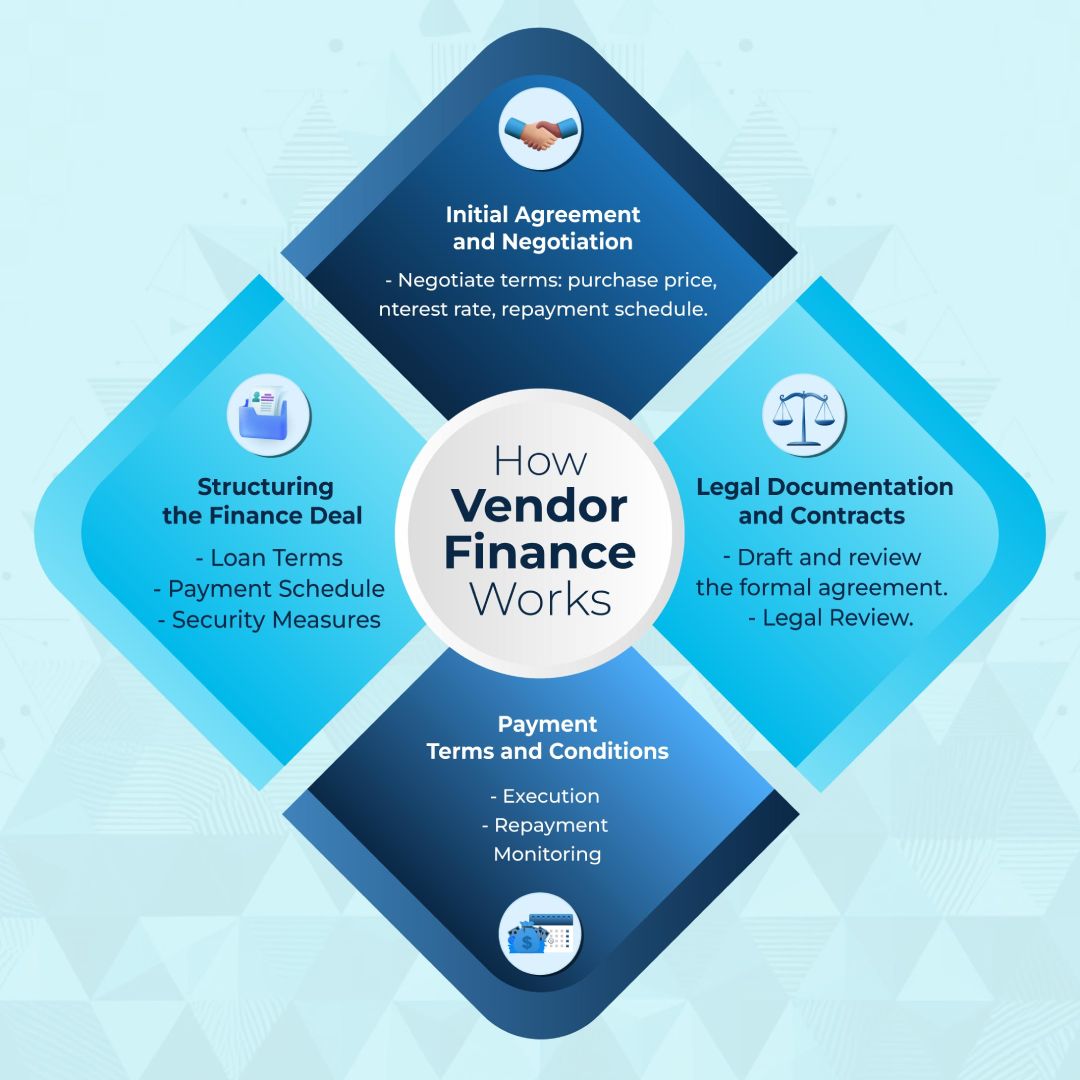
While less formal than bank lending, securing a vendor loan still involves a structured process that requires careful negotiation and documentation. Both parties must approach this process with diligence and transparency to ensure a successful outcome.
Initial Negotiation and Due Diligence
The first step involves extensive negotiation of the purchase price, the amount of the vendor loan, the interest rate, and the repayment schedule. The buyer will conduct due diligence on the business, while the seller will assess the buyer’s creditworthiness and business acumen. This mutual evaluation lays the groundwork for trust.
Structuring the Loan Agreement
Once initial terms are agreed upon, the specifics of the loan must be meticulously documented. This includes defining collateral, outlining default clauses, and specifying any conditions tied to the loan. The structure often dictates the loan’s security and the seller’s recourse in adverse situations.
Legal Considerations and Documentation
A formal loan agreement, promissory note, and security agreement are critical legal documents. It is highly advisable for both buyer and seller to engage their own legal counsel to draft and review these documents. This ensures that their respective interests are protected and that the agreement is legally sound and enforceable.
When is a Vendor Loan a Good Option?
Vendor financing is particularly effective in several scenarios. It’s often ideal for small to medium-sized businesses where traditional bank financing might be too cumbersome or simply unavailable. It also works well when a seller wants to achieve a higher sale price by making the deal more attractive and accessible. Furthermore, in niche industries or during economic downturns, vendor loans can be a lifeline for transactions that would otherwise fall through.
Frequently Asked Questions About Vendor Loans
Write a quality, in-depth, magazine-style article on the topic:
Write in English
Use a clickbait and catchy headline. Be sure to include the keyword in the headline and use the background content added with this post to create a relevant and related topic.
Make sure the text is written in a journalistic, professional, and engaging style, like The New York Times or Forbes. The tone should be optimistic, forward-looking, and persuasive. Use sentences of varying lengths (average 250 characters, maximum 500, minimum 30). Use appropriate analogies, descriptive adverbs (e.g., “incredibly effective”), and correct adverbial phrases (e.g., “By integrating insights from AI…”). Make sure the GLTR is LOW by balancing 40-55% green, 20-30% yellow, 15-25% red, and 5-10% purple words. Use present and past participles to add dynamism. Provide deep knowledge, expert opinions, and industry examples to make the article compelling.
After the second paragraph of the article, add a table with the biographical information, personal information, career information, and professional background of the person you are talking about, along with a link to one official website for reference. The table should be in a format that is easy to embed in WordPress.
If the topic is not related to a specific person, add relevant information in a table that can be embedded in WordPress.
Ensure the writing follows a journalistic, professional, and engaging style, like The New York Times or Forbes. The tone should be optimistic, forward-looking, and persuasive. Use varied sentence lengths (average 250 characters, max 500, min 30). Incorporate relatable analogies, descriptive adverbs (e.g., ‘remarkably effective’), and proper adverbial phrases (e.g., ‘By integrating AI-driven insights…’). Ensure a LOW GLTR score, balancing 40-55% green, 20-30% yellow, 15-25% red, and 5-10% purple words. Use present and past parts to enhance dynamism. Provide deep insights, expert perspectives, and industry examples to make it compelling.
After the second paragraph of the article add table with bio data and personal information, career, professional information of person in topic, also add link to one authentic website for reference, the table should be in the form that it can be easily inserted in wordpress.
If the topic is other than person related than add related information in the form of table that can be inserted in wordpress.
What is the typical interest rate on a vendor loan?
Interest rates on vendor loans are highly negotiable and can vary widely. They often fall somewhere between the prime rate offered by banks and higher rates associated with riskier private loans. Factors influencing the rate include the buyer’s creditworthiness, the financial health of the business being sold, the duration of the loan, and prevailing market rates.
Are vendor loans secured or unsecured?
Vendor loans can be either secured or unsecured. In most cases, sellers prefer to secure the loan against the assets of the business being sold, or even a personal guarantee from the buyer. This provides the seller with a form of recourse if the buyer defaults. Unsecured vendor loans are riskier for the seller and typically only offered when the buyer has an exceptionally strong credit profile or when the loan amount is relatively small.
Can a vendor loan be combined with other financing?
Yes, vendor loans are frequently used in conjunction with other forms of financing. It’s common for a buyer to secure a traditional bank loan for a portion of the purchase price, contribute some cash equity, and then use a vendor loan to cover the remaining balance. This blended approach can optimize terms and reduce risk for all parties.
What happens if the buyer defaults on a vendor loan?
If a buyer defaults, the specific consequences are outlined in the loan agreement. Typically, the seller would have the right to reclaim the collateral (the business or its assets), pursue legal action to recover the outstanding balance, or enforce personal guarantees. The severity of the default and the terms of the agreement dictate the seller’s available remedies.
Author