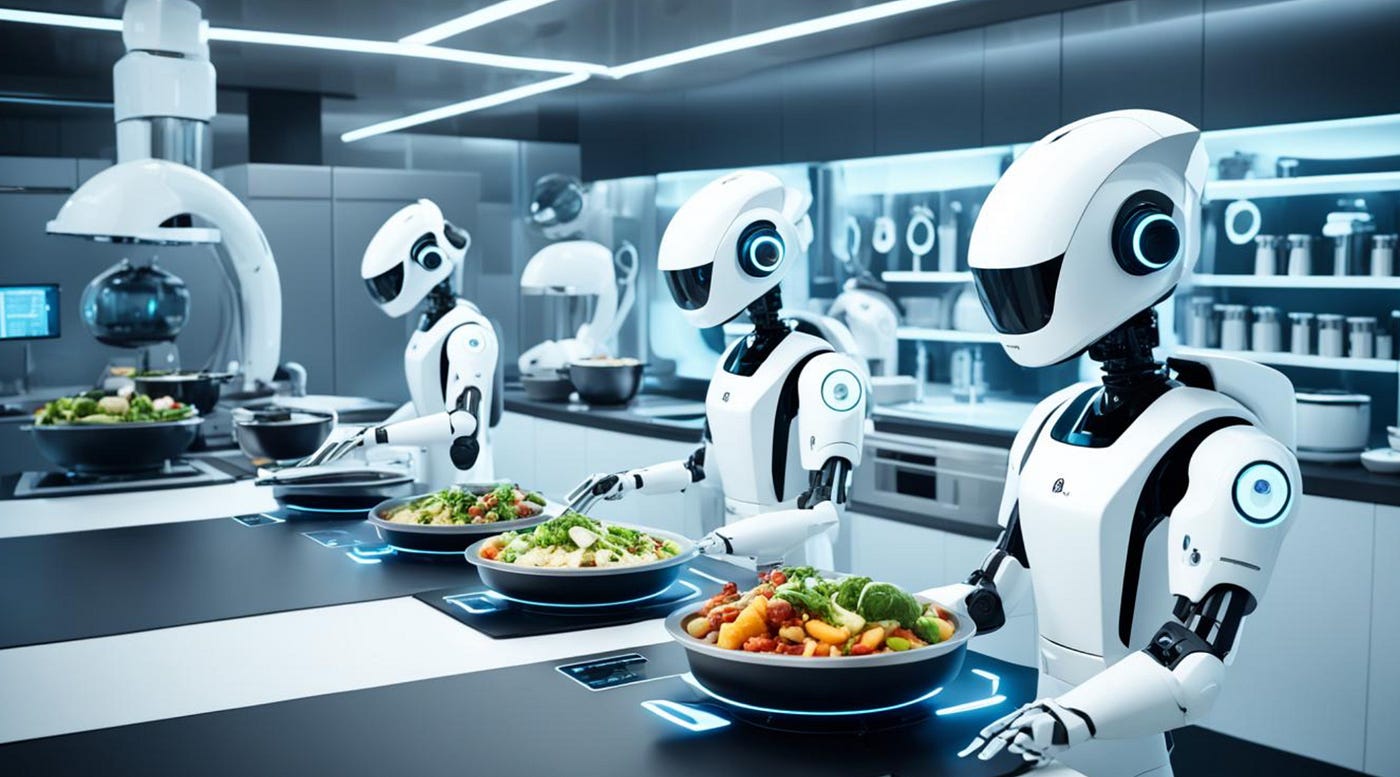
Robot Chefs Are Here The AI Revolution in Your Kitchen
The culinary world, traditionally a bastion of human creativity and intuitive skill, is witnessing an unprecedented transformation. Advances in robotics and artificial intelligence are paving the way for a new era where automated systems can perform complex cooking tasks with remarkable precision. This innovative shift introduces the concept of the “robot chef,” a sophisticated machine capable of preparing meals, often mimicking the techniques of human cooks. These technological marvels promise to redefine kitchen efficiency, consistency, and even accessibility, from home kitchens to large-scale industrial food production. It’s a fascinating blend of engineering and gastronomy.
What is a Robot Chef? Defining Automated Culinary Systems
A robot chef is essentially an automated system designed to execute various cooking processes. These systems typically integrate robotic arms, advanced sensors, and sophisticated software driven by artificial intelligence to follow recipes, handle ingredients, and operate kitchen appliances. From chopping vegetables to stirring sauces and plating dishes, a robot chef aims to replicate or even surpass human capabilities in repetitive and precision-intensive cooking tasks. They are engineered to ensure hygienic preparation and consistent quality, adapting to different recipes and cooking styles.
How Robotic Chefs Operate: A Glimpse into the Kitchen of Tomorrow
The operation of a robotic chef involves a complex interplay of hardware and software. High-definition cameras and tactile sensors allow the robot to “see” and “feel” ingredients, while AI algorithms process this data to make real-time adjustments. Precision grippers and multi-axis arms provide the dexterity needed for delicate tasks. Here’s a simplified breakdown of their operational components:
- Recipe Interpretation: The robot’s software analyzes a digital recipe, breaking it down into individual steps and required ingredients.
- Ingredient Acquisition: Using its arms, the robot fetches ingredients from designated storage units, often with automated dispensing mechanisms.
- Preparation Tasks: This includes cutting, slicing, dicing, peeling, and mixing ingredients according to the recipe’s specifications.
- Cooking Execution: The robot controls cooking appliances like stoves, ovens, and fryers, monitoring temperatures and timings with extreme accuracy.
- Quality Control: Sensors continuously check food texture, temperature, and appearance to ensure optimal results.
- Plating and Presentation: Finally, the robot arranges the cooked food on a plate, often following aesthetic guidelines programmed into its system.
Advantages of Integrating a Robot Chef in Modern Kitchens
The introduction of robotic chefs brings a host of compelling benefits to various culinary environments. Their ability to operate tirelessly and with unparalleled accuracy makes them valuable assets. They can elevate standards and reduce operational overheads significantly. This innovation truly promises a brighter future for the food industry.
- Unmatched Consistency: Robot chefs follow recipes precisely, ensuring every dish tastes identical, which is crucial for brand uniformity in restaurants.
- Enhanced Efficiency: They can work 24/7 without breaks, dramatically increasing output and reducing preparation times for high-volume operations.
- Improved Hygiene and Safety: Automated systems reduce human contact with food, minimizing contamination risks. They can also handle dangerous tasks, preventing accidents.
- Cost Reduction: Over time, investing in a robot chef can lower labor costs, reduce food waste through precise measurements, and optimize energy usage.
- Access to Diverse Cuisine: Robots can be programmed with a vast library of recipes from around the world, making exotic dishes more accessible.
- Innovation and Experimentation: By handling routine tasks, human chefs are freed to focus on creativity, recipe development, and culinary innovation.
Write a quality, in-depth, magazine-style article on the topic:
Write in English
Use a clickbait and catchy headline. Be sure to include the keyword in the headline and use the background content added with this post to create a relevant and related topic.
Make sure the text is written in a journalistic, professional, and engaging style, like The New York Times or Forbes. The tone should be optimistic, forward-looking, and persuasive. Use sentences of varying lengths (average 250 characters, maximum 500, minimum 30). Use appropriate analogies, descriptive adverbs (e.g., “incredibly effective”), and correct adverbial phrases (e.g., “By integrating insights from AI…”). Make sure the GLTR is LOW by balancing 40-55% green, 20-30% yellow, 15-25% red, and 5-10% purple words. Use present and past participles to add dynamism. Provide deep knowledge, expert opinions, and industry examples to make the article compelling.
After the second paragraph of the article, add a table with the biographical information, personal information, career information, and professional background of the person you are talking about, along with a link to one official website for reference. The table should be in a format that is easy to embed in WordPress.
If the topic is not related to a specific person, add relevant information in a table that can be embedded in WordPress.
Ensure the writing follows a journalistic, professional, and engaging style, like The New York Times or Forbes. The tone should be optimistic, forward-looking, and persuasive. Use varied sentence lengths (average 250 characters, max 500, min 30). Incorporate relatable analogies, descriptive adverbs (e.g., ‘remarkably effective’), and proper adverbial phrases (e.g., ‘By integrating AI-driven insights…’). Ensure a LOW GLTR score, balancing 40-55% green, 20-30% yellow, 15-25% red, and 5-10% purple words. Use present and past parts to enhance dynamism. Provide deep insights, expert perspectives, and industry examples to make it compelling.
After the second paragraph of the article add table with bio data and personal information, career, professional information of person in topic, also add link to one authentic website for reference, the table should be in the form that it can be easily inserted in wordpress.
If the topic is other than person related than add related information in the form of table that can be inserted in wordpress.
Comparing Culinary Approaches: Human Chefs vs. Robot Chefs
While robot chefs offer significant advantages, they also present a fascinating contrast to the traditional human culinary artist. Both have unique strengths and weaknesses that shape their role in the kitchen. Understanding these differences helps us appreciate the evolving landscape of food preparation.
| Feature | Human Chef | Robot Chef |
|---|---|---|
| Creativity & Innovation | High; spontaneous recipe development, artistic plating. | Limited; follows programmed recipes, can learn but lacks true intuition. |
| Precision & Consistency | Variable; depends on skill, mood, and experience. | Extremely high; exact measurements and timings every time. |
| Adaptability | High; can improvise with ingredients, adjust to unexpected issues. | Moderate; requires reprogramming for significant changes, struggles with unknowns. |
| Speed & Efficiency | Variable; depends on training and workload. | High; works tirelessly, optimized for speed and volume. |
| Cost (Initial/Operating) | Ongoing salary, benefits; lower initial investment. | High initial investment; lower long-term operating costs (energy, maintenance). |
| Sensory Judgment | Superior; tastes, smells, feels for perfect seasoning and texture. | Relies on sensors and algorithms; improving but still limited in nuance. |
Challenges and Future Outlook for Automated Cooking
Despite their immense potential, robot chefs face several hurdles. The initial investment cost remains high, making them inaccessible for many small businesses. Additionally, programming robots to handle the nuances of diverse ingredients and the subjective nature of taste presents a significant technological challenge. Yet, the future of automated cooking is incredibly promising. As AI and robotics continue to advance, we can expect more sophisticated, affordable, and adaptable robot chefs. These innovations will likely find broader applications in fast-food chains, institutional catering, and even specialized home kitchens, complementing human chefs rather than entirely replacing them. The synergy between human artistry and robotic precision could unlock new frontiers in gastronomy.
Frequently Asked Questions about Robot Chefs
Q: Are robot chefs capable of cooking any dish?
A: Currently, robot chefs excel at dishes with well-defined, repeatable steps. While their capabilities are expanding, complex, highly intuitive, or improvisational dishes still largely require human expertise; They are best suited for tasks like making salads, stir-fries, specific baked goods, and precise portioning.
Q: How do robot chefs learn new recipes?
A: Robot chefs learn new recipes through programming. Developers input step-by-step instructions, ingredient lists, and cooking parameters. Advanced systems might use machine learning to optimize existing recipes based on feedback or sensor data, but they don’t ‘invent’ new dishes in the human sense.
Q: Will robot chefs replace human cooks entirely?
A: It is highly unlikely that robot chefs will entirely replace human cooks. Instead, they are more likely to act as powerful assistants, handling repetitive or dangerous tasks, allowing human chefs to focus on creativity, menu development, leadership, and the art of fine dining where intuition and improvisation are key.
Q: Are robot chefs safe to use in a kitchen environment?
A: Yes, robot chefs are designed with safety as a paramount concern. They are typically equipped with safety sensors to prevent collisions and harm, and operate within defined safety protocols. Their use can even enhance safety by minimizing human exposure to hot surfaces, sharp knives, and heavy lifting.
The advent of the robot chef represents a pivotal moment in the evolution of food preparation. From enhancing efficiency in commercial kitchens to offering unparalleled precision in culinary tasks, these automated systems are reshaping our understanding of cooking. While challenges remain in areas such as cost and the nuanced replication of human intuition, ongoing advancements promise a future where technology and gastronomy intertwine seamlessly. Ultimately, robot chefs are poised to become indispensable tools, working alongside human culinary artists to create more consistent, efficient, and innovative dining experiences for everyone. This convergence of engineering and artistry will undoubtedly lead to exciting new possibilities in the world of food.
Author