Sustainable Home Living: Eco-Friendly Upholstery Care for the Modern Homeowner
The most intentional homeowners apply the same sustainability standards at home as in every other part of their lives. The furniture you sit on, the products used to clean it, and what those products leave behind are daily-contact decisions that shape air quality, long-term health, and environmental impact. In communities like Bothell, Washington, upholstery cleaning has evolved from routine maintenance into a values decision — one driven by the question homeowners increasingly ask: not just whether a service works, but how it works and what it leaves in the home.
The Hidden Cost of Conventional Upholstery Cleaning
Most traditional furniture cleaning relies on synthetic solvents, optical brighteners, and petrochemical surfactants. These don’t disappear after a cleaning crew leaves — they off-gas into indoor air, settle into fabric fibers, and enter the water system during rinse and disposal. The EPA consistently ranks indoor air quality among the top five environmental health risks, and conventional cleaning chemistry is a contributing factor rather than a remedy.
Volatile organic compounds, chlorine-based solvents, and petroleum distillates appear routinely in off-the-shelf upholstery treatments. For households with children, pets, or respiratory sensitivities, long-term exposure in enclosed spaces creates compounding risk. In a region where environmental accountability is a community baseline, conventional cleaning chemistry sits uneasily against the values most Bothell residents hold.
What Genuinely Green Cleaning Involves
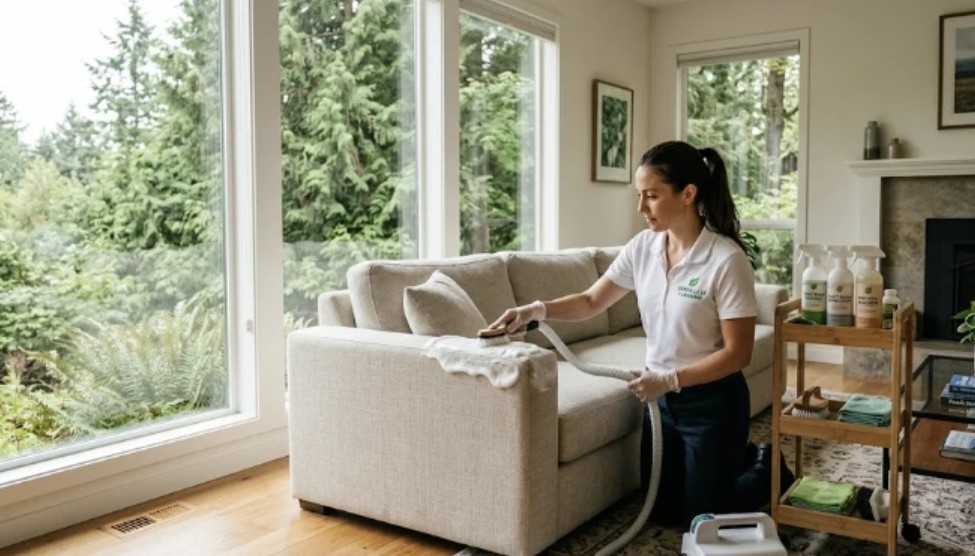
The term “eco-friendly” has become a marketing fixture, so specificity matters. Genuinely green upholstery cleaning is built on several overlapping factors: plant-based or biodegradable cleaning agents (citrus extracts, enzyme formulations, plant surfactants) that break down safely after use; low-moisture application techniques that use far less water than conventional steam extraction and shorten dry times significantly; formulations that leave no toxic residues on fabric fibers; responsible wastewater handling that prevents runoff into storm drains or groundwater; and non-aerosol application that avoids propellant-based VOC load.
When a provider meets all of these criteria, the result is furniture that is genuinely clean — free from biological contaminants and chemical residues — rather than furniture that merely looks clean while carrying new concerns.
Why Bothell Homeowners Are Setting the Standard
Bothell combines a professional demographic — many residents work in the Redmond and Bellevue technology corridor — with deep appreciation for the Pacific Northwest environment. This produces a homeowner profile that is quality-conscious and environmentally informed: people who research providers before booking and ask specific questions about what enters their homes.

Demand for eco-friendly upholstery cleaning in Bothell WA has grown steadily alongside the community’s expansion and deepening sustainability culture. These are not trend-followers — they are homeowners who have made environmental responsibility structural, from energy choices to the service providers they invite inside.
The regional climate reinforces the preference. Pacific Northwest moisture — persistent humidity, tracked-in dampness, seasonal rain — makes over-wet cleaning genuinely risky. Furniture that holds moisture after treatment is at elevated risk for mold and mildew within the cushioning layers. Low-moisture green techniques clean thoroughly while keeping dry times short, which is both safer for fabric and better suited to the climate.
The Allergen Case for Professional Green Cleaning
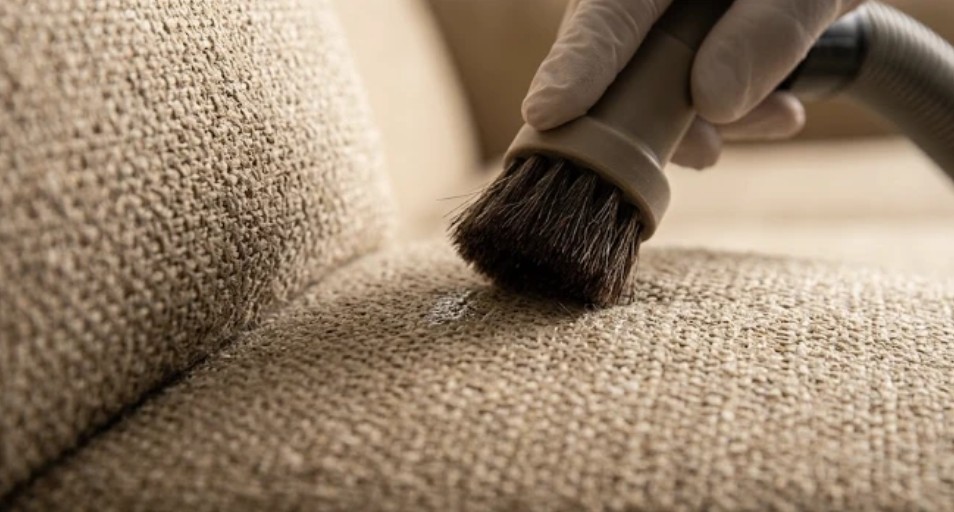
One of the strongest arguments for professional eco-friendly upholstery care is what’s already living in your furniture. Dust mites, pet dander, mold spores, and accumulated pollen settle into upholstered surfaces faster than most people expect. A sofa in regular use can harbor millions of dust mites within months, concentrated in cushion seams and low-airflow zones. Standard vacuuming removes surface debris but doesn’t reach what’s embedded in deeper fiber layers.
Green cleaning methods are distinctly superior for allergen removal because they eliminate biological contaminants without introducing chemical irritants. Conventional cleaning can remove dust mites while leaving behind surfactant residues and synthetic fragrances that affect air quality differently. An eco-conscious approach removes the biological problem without adding a chemical one — a meaningful distinction for sensitive households in a region with significant seasonal pollen loads.
Furniture Longevity as a Sustainability Act
There is a sustainability case for professional upholstery maintenance that goes beyond chemistry: extending the life of your furniture is itself an environmental choice. Manufacturing upholstered furniture is resource-intensive — raw materials, foam, fabric, the energy of production and logistics. Every additional year a well-maintained piece remains in use amortizes its environmental cost across a longer functional life.
Furniture maintained with professional green methods realistically lasts two to three times longer than furniture subjected to harsh cleaning chemistry or chronic neglect. Aggressive solvents, over-wetting, and abrasive scrubbing cause cumulative damage — pilling, color fading, structural fiber weakening — that shortens a piece’s useful life considerably. Quality furniture, properly maintained, is not just more comfortable to live with. It represents a more sustainable consumption pattern: buy well, maintain thoughtfully, replace rarely.
Maintenance Between Professional Visits
In Bothell, the natural windows for professional upholstery care are spring — after months of closed windows and heavy indoor activity — and early fall, before the rainy season keeps residents indoors for extended periods. Between visits, rotating cushions every few weeks, vacuuming monthly with a HEPA-filtered machine, blotting spills immediately rather than rubbing, and keeping pieces out of direct sunlight all preserve results and extend the interval between professional cleanings.
What to Ask Before Booking
Not every provider that markets green cleaning delivers on that claim. Before booking, ask what products are used and whether they carry certification from Green Seal, the EPA Safer Choice program, or a comparable third-party body. Ask whether the service uses low-moisture or dry-extraction methods, and how wastewater is disposed of. A credible provider answers with specifics and without hesitation. Vague responses are reliable signals that the eco-friendly positioning is primarily marketing.
Home as a Reflection of Values
The choices we make inside our homes reflect something real about how we approach quality, health, and environmental responsibility. Upholstery cleaning is a small line item in the full picture of home maintenance — but it is also a daily-contact decision that affects the air everyone in the household breathes and the surfaces everyone touches.
For Bothell residents who have built households around genuine sustainability values, choosing eco-conscious professional services is a natural extension of that identity. The Pacific Northwest has long set a baseline expectation of environmental accountability — one expressed in building choices, energy decisions, and in who is trusted to care for the furniture a family lives on every day. When sustainability is a real value rather than a marketing angle, it shows up in the details.
Author